

If you're moving a video library to a new platform, switching OTT platform providers, or trying to get your content in front of more viewers across multiple streaming services. You've already hit the same wall most streaming businesses hit early: nobody tells you how much is actually involved in an OTT content transfer.
It's not just uploading videos.
Behind every streaming platform lies a web of interconnected assets, including metadata, subscriber records, watch histories, DRM licenses, subtitles, thumbnails, subscription plans, and payment mappings. Move the video files and forget the rest, and viewers land on a broken experience they may never forgive.
This guide breaks down exactly what OTT content transfer means, when you need it, how the process works end-to-end, and how to execute it without disrupting your platform or your audience.
What Is OTT Content Transfer?
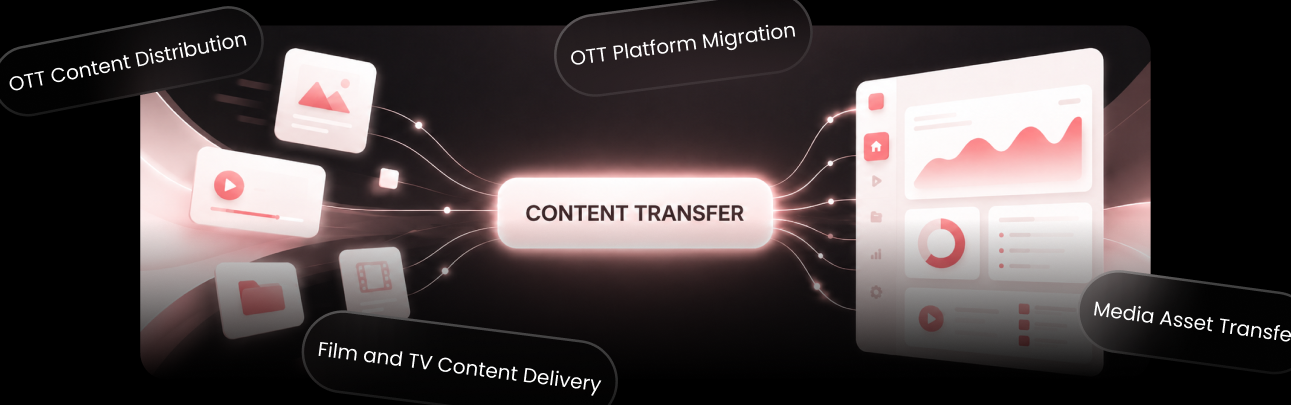
OTT content transfer is the process of moving video content, metadata, subscriber information, and related streaming assets from one system, platform, or distribution channel to another.
The term can refer to several different activities:
Migrating from one OTT platform to another
Moving media assets between content management systems
Distributing content to multiple OTT services
Delivering films and TV content to streaming platforms
Transferring live streaming archives and video libraries
While the phrase sounds simple, a complete transfer often involves thousands of interconnected assets that must remain synchronized throughout the process.
Why OTT Content Transfer Matters More Than Most Businesses Expect
For most streaming businesses, content is the foundation of their platforms.
Every video on your platform carries layers of structured information such as titles, descriptions, genre tags, release dates, language metadata, DRM configurations, user entitlements, and access rules. Lose any of these during a transfer, and the result is broken search, missing content, or viewers unable to access content they've already paid for.
A well-executed transfer allows businesses to:
Launch new OTT platforms faster, without rebuilding content libraries from scratch
Maintain subscriber trust through seamless platform transitions
Expand content reach by distributing across multiple streaming services
Reduce technical debt from aging legacy platforms
Preserve SEO equity tied to content URLs and structured metadata
A poorly planned one can mean weeks of manual cleanup and subscriber churn you won't recover.
What Are the Different Types of OTT Content Transfer?
1. OTT Platform Migration
OTT platform migration is the most complex and complete form of content transfer. It involves moving everything, such as content, users, subscriptions, and configurations, from one OTT platform provider to another OTT platform provider.
When businesses need it:
Outgrowing a SaaS OTT solution and moving to a custom or white-label OTT platform
Consolidating multiple streaming services into one unified platform
Switching providers due to cost, features, or scalability requirements
What gets migrated:
Video content (movies, episodes, live recordings, VOD)
Metadata records (titles, descriptions, tags, categories)
User accounts (credentials, profiles, preferences)
Subscription plans and billing data
App configurations (mobile, web, TV)
2. Media Asset Transfer
Media asset transfer focuses specifically on moving video files and their accompanying assets between storage systems, cloud platforms, or content management systems without necessarily changing the streaming platform provider itself.
Common assets involved:
Video masters and encoded renditions
Audio tracks and alternate language versions
Subtitle files and closed captions
Thumbnails, posters, and artwork
Promotional trailers
For large libraries, these transfers can involve terabytes or more of data and require reliable pipelines that handle errors gracefully.
3. OTT Content Distribution
OTT distribution is the process of publishing content across multiple streaming platforms to reach a broader audience. Unlike migration, distribution is not about replacing one platform; it's about expanding where content lives.
Examples:
Publishing original content to one's own branded OTT app while simultaneously syndicating to FAST channels
Delivering regional content to country-specific streaming services
Expanding a film or series to new markets via SVOD licensing agreements
Distribution is often an ongoing operational process, not a one-time project.
4. Film and TV Content Delivery
For filmmakers and content owners, OTT content transfer often means preparing and delivering content packages that meet the technical specifications of streaming platforms.
Typical delivery requirements:
Video format: MP4 or MOV, H.264 or H.265 codec
Resolution: 16:9 aspect ratio, Rec. 709 color space
4K: 10-bit color depth
Supporting assets: subtitle files, closed captions, copyright documentation, high-resolution posters, metadata sheets
Each platform may have its own acceptance criteria. Missing one requirement can trigger an automated rejection, restarting a process that takes
OTT Content Transfer vs OTT Distribution: What's the Difference?
These terms get confused often. They're related, but they solve different problems.
What Assets Are Involved in OTT Content Transfer?
The assets involved in OTT content transfer vary depending on whether you're migrating platforms, exchanging media assets, distributing content, or delivering content to streaming services. Understanding what needs to move helps prevent data loss, playback issues, and operational disruptions.
1. Assets Transferred During OTT Platform Migration
When migrating from one OTT platform to another, businesses typically transfer:
Video Content Libraries: The complete collection of movies, TV shows, live recordings, VOD assets, trailers, and promotional videos available on the platform.
Metadata: Structured information such as titles, descriptions, genres, tags, languages, and release dates that helps viewers discover content.
User Accounts: Subscriber login credentials, profiles, preferences, and account settings required to maintain uninterrupted access.
Subscription Plans: Pricing structures, active subscriptions, billing cycles, and entitlement rules that determine content access.
Watch History: Viewing progress, watchlists, favorites, and personalized recommendations that enhance user retention.
Payment Mappings: Payment gateway configurations and transaction associations used to maintain recurring billing relationships.
DRM Configurations: Digital Rights Management settings that protect content and control playback permissions across devices.
These assets work together to ensure subscribers experience a seamless transition without losing access to content or account information.
2. Assets Transferred for Media Asset Delivery
When content owners, broadcasters, or production houses exchange content, the transfer usually includes:
Master Video Files: The highest-quality source files used for future encoding, distribution, and archiving purposes.
Mezzanine Files: Production-grade intermediary files optimized for efficient processing and multi-platform distribution workflows.
Audio Tracks: Multiple language tracks, surround sound mixes, commentary tracks, and accessibility audio assets.
Subtitle Files: Time-synchronized text files that support multilingual audiences and improve content accessibility.
Closed Captions: Accessibility-focused captions that include dialogue, speaker identification, and important sound effects.
Artwork Packages: Posters, cover art, thumbnails, and promotional imagery used across OTT applications and storefronts.
Promotional Creatives: Marketing assets such as trailers, teasers, banners, and social media materials supporting content launches.
These assets are transferred between production systems, broadcasters, OTT operators, and distribution partners to maintain content quality and consistency.
3. Assets Required for OTT Content Distribution
When distributing content to streaming platforms, additional packaging elements may be required:
Content Metadata: Platform-ready metadata formatted according to the requirements of each distribution destination.
Thumbnail Images: Visual preview assets designed to improve click-through rates and content discoverability.
Category Mappings: Content classifications that organize titles into genres, collections, and platform-specific categories.
Regional Rights Information: Licensing details that define where content can legally be streamed and monetized.
Distribution Schedules: Publishing timelines that determine when content becomes available across different platforms and regions.
Advertising Markers: Cue points and ad break markers used for AVOD and FAST channel monetization workflows.
Content Availability Windows: Start and end dates controlling content availability based on licensing agreements.
These assets help streaming platforms accurately publish, organize, and monetize content across multiple audiences and regions.
4. Assets Required for Film Delivery to OTT Platforms
For filmmakers and content distributors, OTT delivery packages typically contain:
Final Video Master: The approved, picture-locked version of the film or series prepared for platform ingestion.
Trailer Files: Promotional video assets used for marketing, content previews, and platform merchandising.
Subtitle and Caption Files: Accessibility and localization assets required to meet platform delivery standards.
Poster Artwork: High-resolution key art used throughout OTT storefronts, apps, and content listings.
Synopsis and Descriptions: Editorial metadata that helps viewers understand and discover the content.
Cast and Crew Metadata: Production credits used for search, content organization, and platform information pages.
Copyright Documentation: Ownership and licensing documents that verify legal distribution rights.
Platform-Specific Delivery Forms: Technical and operational documents required by individual OTT platforms during content onboarding.
Without these supporting assets, many OTT platforms may delay or reject content submissions during the review and ingestion process.
How Does OTT Content Transfer Work? (6-step Process )
The OTT content transfer process varies depending on whether you're migrating an OTT platform, transferring media assets, distributing content, or delivering content to a streaming service. However, most workflows follow the same core stages: preparation, asset packaging, transfer, validation, and publishing.
Step 1: Identify the Transfer Objective
Before moving any content, define what type of transfer is required.
Common OTT content transfer scenarios include:
Migrating from one OTT platform to another
Delivering content to streaming platforms
Distributing content across multiple OTT services
Exchanging media assets between broadcasters and content owners
The transfer objective determines which assets, workflows, and technical requirements apply.
Step 2: Prepare Content and Supporting Assets
Once the objective is clear, gather all required content assets.
Depending on the transfer type, this may include:
Video masters
Encoded streaming files
Metadata records
Subtitle and caption files
Artwork and promotional creatives
User and subscription data
Licensing and rights documentation
A complete asset inventory helps avoid delays and missing content during transfer.
Step 3: Package Content for Transfer
must often be organized according to platform, distributor, or partner requirements.
This packaging stage may involve:
Standardizing file formats
Structuring metadata fields
Organizing subtitle files
Validating artwork specifications
Preparing delivery manifests
Proper packaging improves ingestion success rates and reduces manual corrections later.
Step 4: Transfer Assets Securely
The actual content transfer can occur through several methods depending on file size, volume, and destination requirements.
Common transfer methods include:
Cloud-to-cloud transfers
Secure file transfer protocols (SFTP)
Media asset management platforms
Content delivery networks (CDNs)
Direct partner ingestion systems
Large OTT libraries often require automated transfer workflows with monitoring and error reporting.
Step 5: Validate Content and Metadata
After the transfer is complete, every asset should be verified before publication.
Validation typically includes:
Video playback testing
Metadata accuracy checks
Subtitle synchronization reviews
Artwork verification
Rights and licensing confirmation
User access validation for migrations
This stage ensures viewers receive a consistent experience across all devices and platforms.
Step 6: Publish, Distribute, or Launch
The final stage depends on the transfer objective.
For OTT platform migrations, this means launching the new streaming environment.
For OTT distribution, it means publishing content to destination platforms.
For film delivery, it means submitting content packages for platform review and ingestion.
Successful transfers conclude only after content is available, accessible, and functioning as intended for the end audience.
What Challenges Can Impact OTT Content Transfer?
Whether you're migrating an OTT platform, exchanging media assets, distributing content, or delivering films to streaming services, content transfers rarely fail because of the video files themselves. Most problems occur in the supporting data, technical requirements, and operational workflows surrounding the content.
1. Metadata Inconsistencies Across Systems
Metadata is often the first asset to break during an OTT content transfer.
A title may have one category structure in the source system and a completely different taxonomy in the destination platform. Missing descriptions, incorrect genre mappings, or incomplete localization data can make content difficult to discover.
Impact:
Broken content organization
Poor search visibility
Incorrect recommendations
Reduced viewer engagement
Most Common In:
OTT platform migrations
OTT distribution workflows
2. Large Media File Transfer Bottlenecks
Unlike traditional documents, OTT content libraries often contain hundreds or thousands of high-resolution video files.
A single 4K movie can be several hundred gigabytes, while an entire streaming library may reach multiple terabytes or petabytes. Slow transfer speeds, interrupted uploads, and storage limitations can delay project timelines significantly.
Impact:
Delayed launches
Incomplete content libraries
Increased storage costs
Most Common In:
Media asset transfers
OTT platform migrations
3. Content Packaging and Format Mismatches
Every OTT platform has specific technical requirements for content ingestion.
Video codecs, container formats, subtitle standards, artwork dimensions, and metadata structures may differ between platforms. Content that works perfectly in one environment may fail ingestion in another.
Impact:
Content rejection
Playback failures
Additional processing costs
Most Common In:
Film delivery
OTT distribution
4. Regional Rights and Licensing Conflicts
Content availability is often governed by licensing agreements that define where and when content can be distributed.
During transfers, missing rights metadata or incorrect territory mappings can unintentionally make content available in unauthorized regions.
Impact:
Compliance risks
Contract violations
Revenue loss
Most Common In:
OTT distribution
Film delivery
5. Subtitle, Caption, and Localization Issues
Global OTT services rely heavily on multilingual content support.
Subtitle files, caption formats, dubbed audio tracks, and translated metadata frequently become disconnected during transfers, creating accessibility and localization problems.
Impact:
Poor user experience
Accessibility compliance issues
Reduced international reach
Most Common In:
Media asset transfers
Film delivery
OTT distribution
6. Subscriber and Entitlement Mapping Errors
For platform migrations, preserving user access is often more important than transferring the content itself.
If subscription plans, payment records, or content entitlements are mapped incorrectly, viewers may lose access to content they have already purchased.
Impact:
Subscriber churn
Support ticket spikes
Revenue disruption
Most Common In:
OTT platform migrations
7. Content Validation and Quality Control Gaps
Many organizations focus heavily on transferring assets but spend insufficient time validating them afterward.
Missing episodes, broken thumbnails, incomplete metadata, failed subtitle tracks, or playback issues often remain unnoticed until viewers report them.
Impact:
Poor customer experience
Negative reviews
Operational rework
Most Common In:
All types of OTT content transfer
Best Practices for Successful OTT Content Transfer
The most successful OTT content transfers are not necessarily the fastest. They are the ones that prioritize content integrity, viewer experience, and operational continuity.
Treat Metadata as Critically as Video Files
Many organizations focus heavily on transferring video assets while treating metadata as secondary. In reality, metadata controls how viewers discover, search, organize, and access content.
A perfectly transferred video library becomes significantly less valuable if titles, descriptions, genres, artwork, or category structures are missing or inconsistent.
Validate Rights Before Distribution Begins
Rights management issues often surface after content has already been published.
Before transferring content to a new platform or distribution partner, verify:
Geographic rights
Distribution rights
Licensing windows
Monetization permissions
Resolving rights issues before transfer is considerably easier than removing content after publication.
Preserve the Entire Viewer Experience
OTT content transfer extends beyond video files.
Viewers expect:
Watch history
Continue watching lists
Favorites and playlists
User profiles
Subscription access
When these elements disappear after a migration, subscribers often perceive the entire platform transition as a failure regardless of content quality.
Standardize Content Packaging
Every OTT platform has slightly different ingestion requirements.
Creating standardized workflows for:
Metadata formatting
Artwork specifications
Subtitle delivery
Audio track management
Content manifests
helps reduce onboarding issues across future distribution partners.
Test Real User Scenarios
Technical validation alone is not enough.
Before launch, test real viewer journeys:
New user registration
Subscriber login
Content playback
Subscription upgrades
Search functionality
Multi-device viewing
The goal is not simply to confirm assets transferred successfully, but to verify that viewers experience the platform exactly as intended.
Plan for Ongoing Content Transfers
Most OTT businesses don't perform content transfers only once.
New content acquisitions, distribution partnerships, regional launches, and platform upgrades create ongoing transfer requirements. Building repeatable workflows today reduces operational complexity as your content library grows.
How Regal Streaming Solutions Supports OTT Content Transfer
Regal Streaming Solutions is a self-hosted white-label OTT platform that enables content owners, broadcasters, media companies, and streaming businesses to launch and manage their own branded streaming services. Unlike SaaS-based OTT platforms, Regal provides full ownership and control over the platform, infrastructure, content, applications, and monetization ecosystem, allowing businesses to build a streaming platform tailored to their operational and business requirements.
Whether you're onboarding a new content library, migrating from an existing OTT platform, expanding content distribution, or launching a new streaming service, Regal provides the technology foundation needed to manage video assets, metadata, content organization, user access, monetization models, and multi-device publishing from a centralized platform. This helps OTT businesses streamline content operations while maintaining complete control over their streaming environment.
Conclusion
OTT content transfer is a broad process that can involve platform migration, media asset transfers, OTT distribution, or content delivery to streaming services. While the exact workflow varies, successful transfers depend on accurately managing video files, metadata, subtitles, artwork, rights information, and user-related assets throughout the process. Missing or poorly managed supporting assets often create more problems than the media files themselves.
As OTT content libraries continue to grow, businesses need more than just a transfer strategy—they need a platform capable of organizing, managing, distributing, and scaling content efficiently after the transfer is complete. By understanding the different types of OTT content transfer, common challenges, and best practices involved, streaming businesses can reduce operational risks, improve content accessibility, and create a better experience for viewers across every device.
Frequently Asked Questions
The biggest risk is not losing video files—it's losing the data connected to those files. Missing metadata, broken subtitle associations, incorrect content rights, or failed subscriber mappings can significantly impact content discoverability and viewer experience, even when the videos themselves transfer successfully.
Not always. If the destination platform supports the existing codec, bitrate profiles, and streaming formats, re-encoding may be unnecessary. However, when content does not meet the technical requirements of the new platform, re-encoding before transfer can prevent playback issues and reduce post-migration processing time.
Yes, but only when the transfer is carefully planned. Many OTT businesses use phased migrations, parallel environments, and staged testing to ensure subscribers maintain access to content during the transition. The goal is to make the transfer invisible to viewers whenever possible.
Content rights are typically managed through metadata records, licensing agreements, and regional availability rules. Before transferring content, businesses should verify distribution territories, licensing windows, and monetization permissions to ensure content remains compliant after publication.
Missing metadata can affect search functionality, recommendations, content categorization, and platform navigation. Even if the video files transfer successfully, poor metadata quality can make content difficult for viewers to find, reducing engagement and watch time.
Businesses typically evaluate migration when they outgrow platform limitations, require additional monetization options, need greater infrastructure control, want self-hosting capabilities, or plan to expand into new markets and devices that their current platform cannot adequately support.
Content onboarding refers to importing new content into a platform for the first time. OTT content transfer generally involves moving existing content and related assets from another system, platform, distributor, or media environment while preserving content structure and operational data.
Success should be measured beyond file completion reports. Businesses should validate playback quality, metadata accuracy, subtitle synchronization, user access permissions, content discoverability, regional availability rules, and monetization functionality before considering the transfer complete.
Self-hosted OTT platforms often provide greater control over content storage, infrastructure configuration, security policies, and migration workflows. This flexibility can simplify large-scale content transfers and reduce dependency on platform-specific restrictions during future migrations or expansions.


